
turn your firm's know-how into searchable, tagged statements.
extract Preview
FOLIO Insights
INPUT: unstructured opinions and briefs. OUTPUT: short, tagged propositions, each tied to its source words.
Turn opinions, briefs, statutes, and treatises into short, tagged propositions. Each one keeps the exact words it rests on, so you can check it in one click.
Insights runs as a preview on a small synthetic corpus.
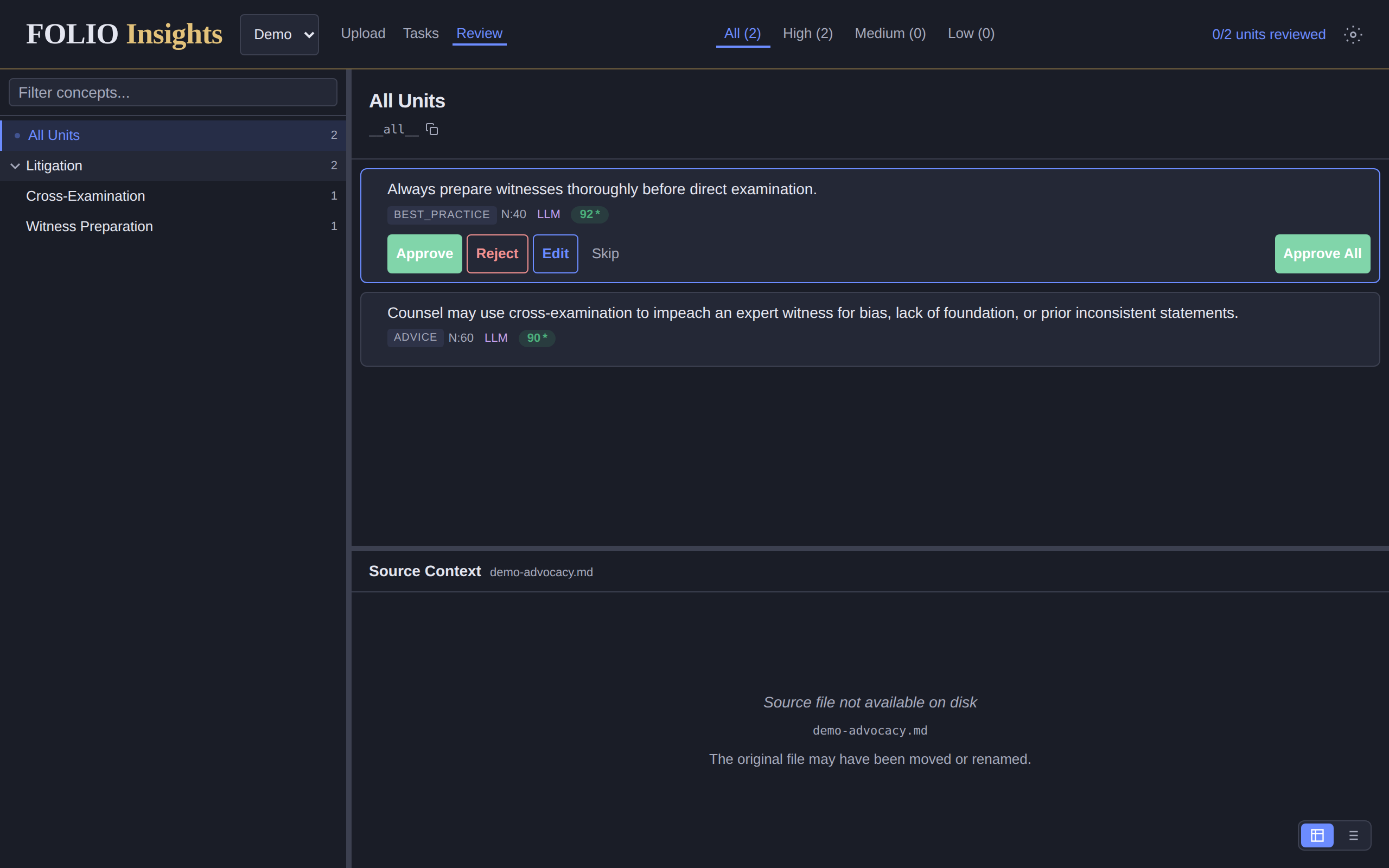
- 1 Insights lists each proposition it extracted from the synthetic demo corpus.
- 2 Labels show the proposition type, such as Best Practice or Advice, and a confidence score.
- 3 Reviewers approve, reject, or edit each proposition.
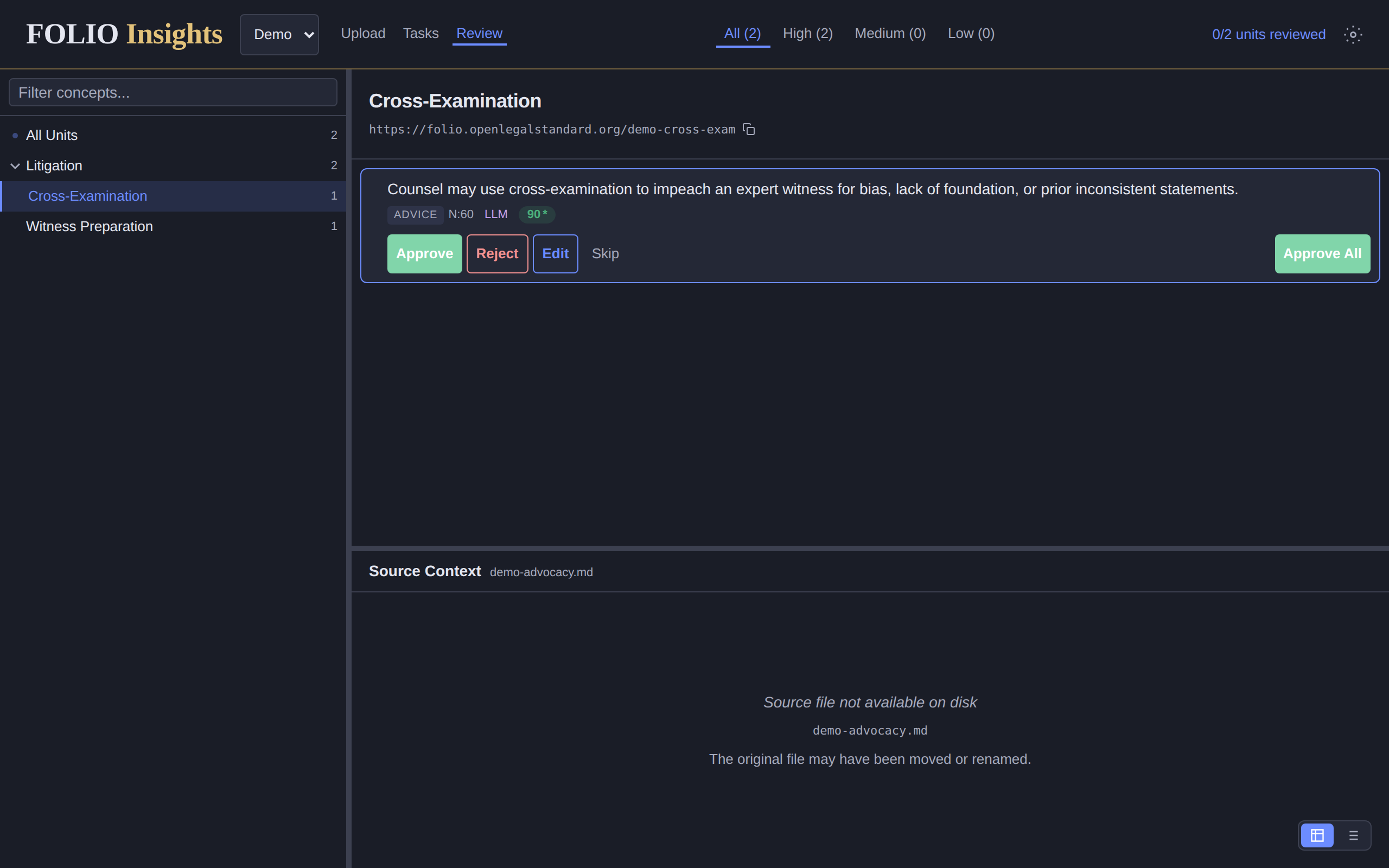
- 1 Choosing Cross-Examination in the concept tree narrows the queue to the propositions filed under it.
- 2 The concept header shows the identifier that each proposition links to.
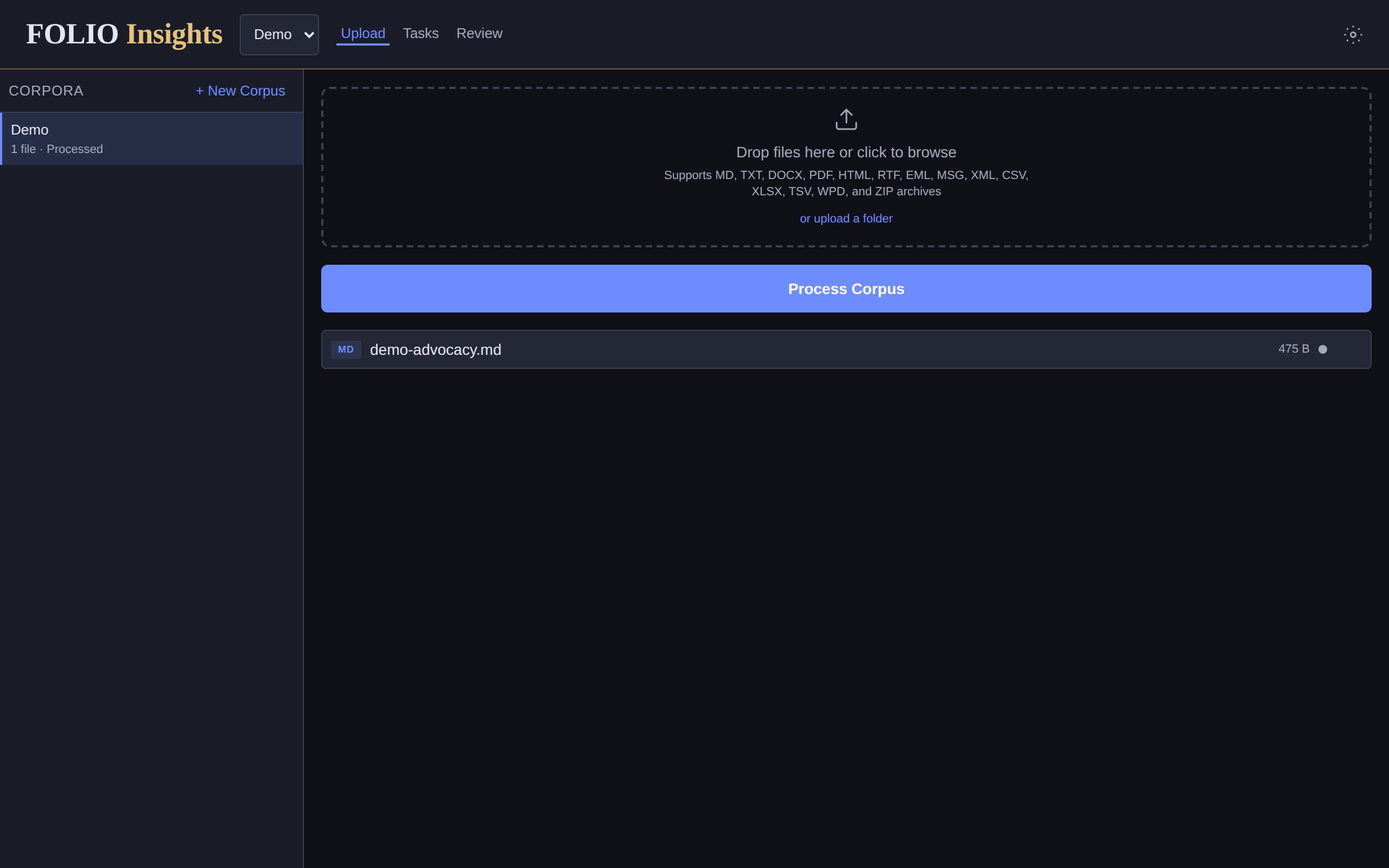
- 1 Upload a corpus of Markdown, Word, PDF, email, or spreadsheet files, or a whole folder.
- 2 Process Corpus runs extraction on the uploaded files.
Try it
What it needs and where your data goes
- API key
- Your own LLM key (Anthropic, OpenAI, Google, or Ollama).
- Processing
- The server never holds a shared key.
- License
- MIT license. FOLIO and BFO ontology data carry CC-BY 4.0 attribution requirements.
Build with it
Run the pipeline from GitHub on your own sources.
How each role uses it
Law Department Legal Operations
tag business requests, outside-counsel work, and responses to business clients, so you see what the business asks for, who handles it, and what it costs.
classify the court's work by case type and area of law, so you measure speed to decision for each.